





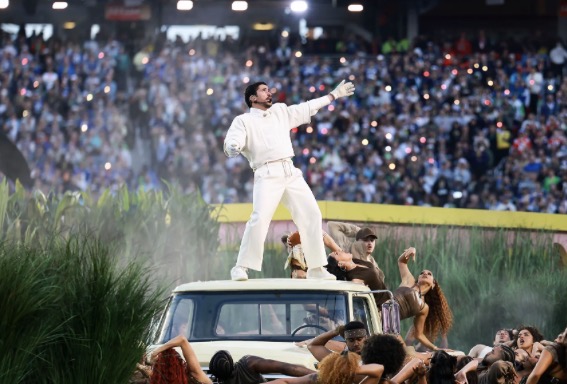
The 2026 Bad Bunny Super Bowl halftime show was a celebration of Latin identity and inclusion. The Puerto Rican artist filled the stage with bright colors, Caribbean-inspired choreography, and Spanish lyrics. His performance proudly stood for a culture often overlooked in mainstream American entertainment. For many fans, it was a moment of visibility.
The show also carried messages of empowerment and equality. Known for supporting gender and LGBTQ+ rights, Bad Bunny included gender-fluid dancers and visuals honoring Puerto Rican heritage. His performance reminded audiences that music can be both entertaining and socially meaningful.
Still, the show sparked controversy among some viewers. Conservative critics called it “too political” or “too provocative,” while others complained about the use of Spanish. Supporters argued that these reactions revealed discomfort with representation. The debate reflected ongoing tensions about who gets to define American culture.
Some also questioned the choreography and costumes, calling them too bold for a family event. Yet compared to past halftime acts, the show was relatively modest. It focused more on culture and symbolism more than anything. The criticism highlighted how cultural bias can shape public opinion.
In the end, Bad Bunny’s halftime show stood as a milestone for diversity. It went against narrow ideas of what “American” culture looks like and celebrated inclusion on a global stage. For many young viewers, it was a reminder that embracing one’s roots is something to be proud of. The performance proved that art can both entertain and inspire change.